
NO ONE LEFT BEHIND:
BRIDGING GAPS, SECURING FUTURES
6-7 OCTOBER 2026, SASANA KIJANG, KUALA LUMPUR
AN EVENT ORGANISED BY

ORGANISING MEMBERS

IN COLLABORATION WITH


ABOUT THE NATIONAL FINANCIAL LITERACY SYMPOSIUM (NFLS) 2026
The NFLS is Malaysia’s annual flagship platform that brings together policymakers, regulators, industry leaders, researchers, and academicians to advance the national financial literacy and financial inclusion agenda. Through thought-provoking plenary discussions and knowledge-sharing sessions, the symposium fosters collaboration, identifies emerging research priorities, and informs evidence-based policies and strategies that strengthen the nation’s financial well-being.
Held in conjunction with Financial Literacy Month 2026, this year’s symposium carries the theme “No One Left Behind: Bridging Gaps, Securing Futures.”
The theme reflects Malaysia’s continued commitment to ensuring that every individual, regardless of age, income, employment status, ability, or life circumstances, has equitable access to financial knowledge for a sustainable well-being.
OBJECTIVES OF THE NATIONAL FINANCIAL SYMPOSIUM (NFLS) 2026
protection, and the lifelong financial challenges encountered by families raising children with special needs. Together, these sessions will identify practical, inclusive, and sustainable strategies to strengthen financial resilience, expand access to appropriate financial products and social protection, and ensure that every Malaysian has the opportunity to achieve financial security and dignity, regardless of life circumstances.
Venue
2, Jalan Dato Onn,
50480 Kuala Lumpur,
Wilayah Persekutuan Kuala Lumpur
Rooms
–Symposium
Conference Hall 2, Sasana Kijang (Level LG2)
–Poster Presentation and Booth Exhibition
1.30 p.m. – 2.30 p.m.
Arrival of Participants
Arrival of VIPS
Welcoming Remarks:
Speech by DG Adnan Zaylani Mohamad Zahid
Deputy Governor, Bank Negara Malaysia
Refreshment
3.30 p.m. – 4.45 p.m.
Plenary 1
When Love Meets Limits: Financial Literacy for the Sandwich Generation in an Ageing Society
Explore how financial literacy and financial inclusion can better support the sandwich generation in navigating difficult trade-offs between caregiving responsibilities, daily financial needs, and long-term financial security in an ageing society.
Moderator:

Suhaimi Ali
Assistant Governor, Bank Negara Malaysia (BNM)

YM Prof. Dato' Paduka Dr. Tengku Aizan Tengku Abdul Hamid
Chairman & Public Interest Director, Private Pension Administrator Malaysia (PPA)

Dr. Joelle H. Fong
Associate Professor at the Lee Kuan Yew School of Public Policy, National University of Singapore

Andy Ng Yen Heng
President, Malaysian Financial Planning Council (MFPC)
End of Day 1
8.30 a.m. – 8.45 a.m.
Arrival of Participants
8.45 a.m. – 10.00 a.m.
Research Paper Presentation 1
Long-Term Financial Sustainability and Resilience

Farhana Roslan
Director of Research, PNB Research Institute (PNBRI)
DISCUSSANT (INDUSTRY):

Datin Hajjah Aida Jaslina Jalaludin
Associate Director, Institute for Capital Market Research Malaysia (ICMR)
DISCUSSANT (ACADEMIA):

Dr. Muhammad Aizat Zainal Alam
Deputy Director, Social Wellbeing Research Centre (SWRC)
PAPER #1 – Sustainable Financial Behaviours and Retirement Preparedness
PRESENTER:

Dr. Chin Phaik Nie
Universiti Sains Malaysia (USM)
PAPER #2 – The Future of Retirement in Malaysia: EPF Adequacy
PRESENTER:

Dr. Tee Chee Lip
Xiamen University Malaysia
PAPER #3 – Financial Fragility in a Pandemic Context
PRESENTER:

Dr. Loke Yiing Jia
Universiti Sains Malaysia (USM)
10.00 a.m. – 10.15 a.m.
Networking Morning Tea Break (Booth exhibition and poster presentation)
10.15 a.m. – 11.30 a.m.
Plenary 2
Beyond Flexibility: Navigating Financial Resilience for Malaysia’s Platform-Based Gig Economy
To discuss the growing role of non-traditional work arrangements, including gig, platform-based, and informal employment in Malaysia, and the financial vulnerabilities faced by workers with irregular and unpredictable incomes.

Suraya Zainudin
Founder, Ringgitohringgit.com

Francesca Chia
Founder & CEO, GoGet Malaysia

Nathan Mathivanan
President, Transformasi Pengangkutan Awam Darat (TPAD)
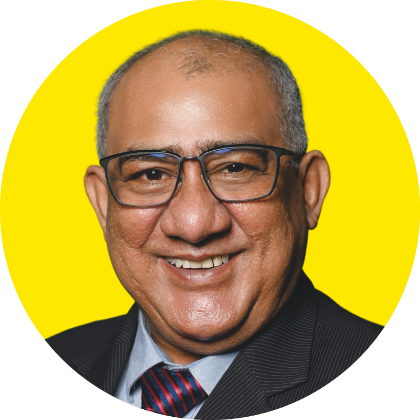
Badrie Abdullah
Head of MyMahir, Talent Corporation Malaysia
11:30 a.m. – 12.45 p.m.
Research Paper Presentation 2
Financial Technology and Digital Ecosystem

Mohammad Mafrukhin Mokhtar
Head of AKPK FEWRC,
Agensi Kaunseling dan Pengurusan Kredit (AKPK)
DISCUSSANT (INDUSTRY):

Hawati Abd Hamid
Head, Social Policy Research, Employees Provident Fund (EPF)
DISCUSSANT (ACADEMIA):

Dr. Shahrin Saaid Shaharuddin
Senior Lecturer, Universiti Malaya
PAPER #4 – Predicting Equity Crowdfunding Success Using Machine Learning
PRESENTER:

Dr. You Hui Wei
Xiamen University Malaysia
PAPER #5 – The Digital Pivot: Financial Inclusion and Banking Stability in Asia
PRESENTER:

Dr. Ahmad Shauqi Haji Mohamad Zubir
Universiti Malaysia Terengganu
PAPER #6 – Psychological Dynamics of Digital Payments (QRIS)
PRESENTER:

Dr. Christianingrum, M.M.
Universitas Bangka Belitung, Indonesia
Networking Lunch
2.15 p.m. – 3.45 p.m.
Research Paper Presentation 3
Financial Literacy, Behaviour and Well-being

Alea Nasihin
Vice President, Research & Development,
Institute for Capital Market Research Malaysia (ICMR)
DISCUSSANT (INDUSTRY):

Nor Fazleen Zakaria
General Manager, Education and Outreach Division,
Agensi Kaunseling dan Pengurusan Kredit (AKPK)
DISCUSSANT (ACADEMIA):

Dr. J.S. Keshminder
Associate Professor and Researcher,
Universiti Teknologi MARA (UiTM)
PAPER #7 – Does Financial Literacy Shape Market Resilience?
PRESENTER:

Lim Siok Jin
New Era University College, Malaysia
PAPER #8 – Shifts in Financial Behaviour and Household Decisions following Malaysia’s Expanded SST 2025
PRESENTER:

Amanda Tan
HELP University
PAPER #9 – Financial Stress and Mental Well-Being Among Malaysian University Students
PRESENTER:

Dr. Ruzanifah Kosnin
Universiti Malaysia Kelantan
Refreshment
4.00 p.m. – 5.15 p.m.
Plenary 3
Beyond Care: Building Financial Security and Dignity for Families with Special Needs Children
To discourse on the financial vulnerability among parents with special needs children
and propose potential protection measures to this marginal group.

Sen (R) Datuk (Dr.) Ras Adiba Radzi
President, Persatuan OKU Sentral

Esther Tan
Former Director, Scheme and Trust Administration, SG Enable, Singapore

Dr. Mohd Zaidi Md Zabri
Research Fellow, Centre for Islamic Economics (CIE), IIUM

Mohd Adli Yahya
Founder, Autism Cafe Project Malaysia
Closing Remarks
End of Symposium

Suhaimi Ali
Assistant Governor, Bank Negara Malaysia (BNM)
Suhaimi Ali has served as Assistant Governor of Bank Negara Malaysia (BNM) since 1 April 2022. Having joined BNM in 1998, he brings over 28 years of central banking experience and currently oversees key functions relating to financial development and innovation, Islamic finance, financial inclusion, as well as LINK and BNM’s regional offices.
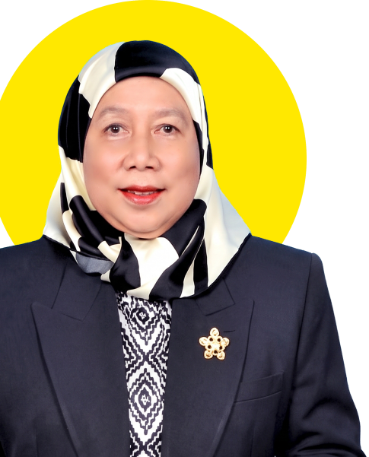
YM Prof. Dato’ Paduka Dr. Tengku Aizan Tengku Abdul Hamid
Chairman and Public Interest Director, Private Pension Administrator Malaysia (PPA)
Professor Dato’ Dr. Tengku Aizan Tengku Abdul Hamid is the Chairperson and a Public Interest Director of Private Pension Administrator Malaysia (PPA). She joined PPA as an Independent Director in 2019 and was appointed its third Chairperson in July 2024. A distinguished social scientist and pioneer in gerontology, she has more than four decades of experience in ageing, retirement security, social policy and socioeconomic wellbeing. She holds a PhD in Human Development and Family Studies, with a multidisciplinary minor in Gerontology, from Iowa State University

Dr. Joelle H. Fong
Associate Professor at the Lee Kuan Yew School of Public Policy, National University of Singapore
Joelle H. Fong is Associate Professor at the Lee Kuan Yew School of Public Policy, National University of Singapore. She holds a PhD in Applied Economics from the Wharton School of the University of Pennsylvania. Joelle’s broad research agenda focuses on the economic and health aspects of population aging, and their implications for policy. Her research interests include pension economics and finance, public and private insurance markets, financial literacy and retirement, longevity risk management, and long-term care financing.

Andy Ng Yen Heng
President, Malaysian Financial Planning Council (MFPC)
Andy Ng Yen Heng brings 36 years of distinguished experience in retail financial services, encompassing 15 years in branch banking management and 21 years in senior leadership roles across insurance distribution, training, and sales management. He is a Fellow and the current President of the Malaysian Financial Planning Council (MFPC).
Suhaimi Ali
Assistant Governor, Bank Negara Malaysia (BNM)
Suhaimi Ali has served as Assistant Governor of Bank Negara Malaysia (BNM) since 1 April 2022. Having joined BNM in 1998, he brings over 28 years of central banking experience and currently oversees key functions relating to financial development and innovation, Islamic finance, financial inclusion, as well as LINK and BNM’s regional offices.
CODE INSTRUCTION
Saya letak custom css untuk Speaker card in Page Custom code
– Click Purple Gear Icon, then Go to Custom Code tab
– Code Consist of:
– code to make both column stretch ikut size card
– text colum jadi justify content: center;
– width <1000px column jadi stack
CSS Class:
Row ->speaker-card
Left col ->speaker-card-text
Right col ->speaker-card-image
ps: set Size row to Equal Column Height

Farhana Roslan
Farhana Roslan is the Director of Research at PNB Research Institute (PNBRI), leading the Institute’s research agenda on wages, self-employment income, savings behaviour, and inclusive economic development. Formerly an equity research analyst at Permodalan Nasional Berhad (PNB), she transitioned into public policy and contributed to Malaysia’s first National Human Development Report with the United Nations Development Programme (UNDP). During her stint with the federal government, she has authored policy memos on fiscal responsibility, state-owned enterprises, and public sector pensions reform. Farhana serves on Malaysia’s Minimum Wage Review Technical Committee (2024) and Strategic Wage Development Committee (2025/2026). She holds a BSc from the London School of Economics and an MPP from Harvard Kennedy School

Datin Hajjah Aida Jaslina Jalaludin
Datin Aida Jaslina Jalaludin is the Associate Director at the Institute for Capital Market Research Malaysia (ICMR), where she leads the design of research programmes to generate insights and shape Malaysia’s capital market. With 30 years of experience in economic policy, capital market development, strategic planning and business transformation, she was instrumental in conceptualising and establishing ICMR. Previously, with the Securities Commission, she led research and strategic planning initiatives supporting national economic and capital market policy, including the Capital Market Masterplan 2 and various blueprints. She holds a BSC in Accounting and Finance from the
London School of Economics and Political Science.

Dr. Muhammad Aizat Zainal Alam
Dr Muhammad Aizat Zainal Alam is Deputy Director of the Social Wellbeing Research Centre (SWRC), Universiti Malaya, and Senior Lecturer at the Faculty of Business and Economics. His research and policy work focuses on social protection, retirement and financial preparedness, ageing, financial literacy, and behavioural economics. Prior to joining academia, he served at the Securities Commission Malaysia. He is actively involved in policy research and engagement on strengthening Malaysia’s social protection and retirement systems.”

Muhammad Mafrukhin Mokhtar
Mohammad Mafrukhin Mokhtar is a committed professional possessing more than 15 years of extensive experience in the fields of accounting, consulting, and research. His comprehensive expertise and competencies have culminated in his present position as the Head of the Research Development Department at the Agensi Kaunseling dan Pengurusan Kredit (AKPK) Malaysia, where he additionally supervises the Financial Education and Well-being Research Centre (FEWRC). Mafrukhin concentrates his research efforts on delivering significant insights for the advancement of financial education programs. He actively endorses advocacy initiatives aimed at promoting prudent financial management practices among Malaysian households and micro, small, and medium enterprises (MSMEs).

Hawati Abd Hamid
Hawati Abd Hamid is the Head of Social Policy Research at the Employees Provident Fund (EPF). Her research focuses on socio-economic issues, including poverty, inequality, social protection, and labour market policies, with particular emphasis on how demographic changes and employment trends interact with social security reforms to strengthen economic resilience and reduce disparities.Prior to joining EPF, she held roles at the Khazanah Research Institute, the Securities Commission Malaysia, and Universiti Teknologi MARA (UiTM). Hawati holds a master’s degree in International Development Studies from the Graduate Institute for Policy Studies in Tokyo, Japan, and an Executive MBA from Universiti Teknologi MARA. She obtained her BA (Hons) in Economics with Computing from the University of Kent, United Kingdom.

Dr. Shahrin Saaid Shaharuddin
Dr. Shahrin Saaid Shaharuddin has been teaching and conducting research in the areas of finance, banking, and capital markets for the past 16 years. His current research interests include financial liberalisation and asset pricing, and he has published various articles arising from his research. He is also actively involved in a number of research projects funded by local research grants. Prior to joining academia, he gained professional experience in banking, financial markets, accounting, and the manufacturing industry

Alea Nasihin
Alea Nasihin is Vice President of Research & Development at the Institute for Capital Market Research Malaysia (ICMR), an independent think tank affiliated with the Securities Commission Malaysia. She currently leads ICMR’s research advocacy and external engagement efforts. With over 15 years’ experience spanning public policy development and strategic research, Alea has also held roles in capital market regulation, the Prime Minister’s Office, and international education.

Nor Fazleen Zakaria
Puan Nor Fazleen is the General Manager of the Education and Outreach Division at AKPK. With over 20 years in the financial sector, she began her career in banking before joining AKPK in 2007 as a pioneer financial counsellor. She has held key leadership roles, including heading the Operations Division, gaining deep insight into financial challenges faced by individuals and small businesses.
Currently, she leads various departments focused on research, financial education, communications, and customer experience. Since 2012, she has expanded AKPK’s impact through inclusive and practical financial education programs. Puan Nor Fazleen is passionate about financial empowerment, inclusion, and responsible wealth management. She holds a BA (Hons) in Accounting and Finance, is a Chartered Management Accountant (CIMA, UK), and a Certified Financial Planner (FPAM)

Dr. J.S. Keshminder
Associate Professor Dr. J.S. Keshminder is an economist and researcher at Universiti Teknologi MARA (UiTM), Malaysia. His research interests span consumer economics, financial literacy, consumer behaviour, green finance, sustainability, and economic well-being.
He has published extensively in peer-reviewed journals, including Management Decision, International Journal of Emerging Markets, Qualitative Research in Financial Markets, and Journal of Sustainable Finance & Investment. His research includes projects on financial literacy, personal financial management behaviour, green sukuk, consumer behaviour, and household economic issues.
He is also actively involved in postgraduate research supervision, journal editorial activities, research evaluation, and international academic collaborations across economics, finance, sustainability, and consumer studies.

Dr. Chin Phaik Nie
Dr. Chin Phaik Nie is currently a Senior Lecturer at the Graduate School of Business. Her research interests and ongoing projects focus on behavioral finance, personal finance, and corporate finance. She holds a Ph.D. in Economics from Universiti Sains Malaysia, a Master of Business Administration (MBA) from Heriot-Watt University, and a Bachelor of Economics (Honours) from the Universiti Malaya. She currently teaches finance courses in the MBA and DBA programmes at the School.
Abstract
This study examines how sustainable financial behaviours based on the Sufficiency Economy Philosophy (SEP)—moderation, reasonableness, and self-immunity—together with financial knowledge and investment risk tolerance, influence retirement preparedness among working adults. A quantitative, cross-sectional design is employed, with data collected through a self-administered online survey of 352 employed adults aged 18 to 65. Marginal effects analysis based on a logistic regression model is conducted to assess the relationships among the variables. When the full model is estimated, reasonableness emerges as the dominant predictor, while investment risk tolerance and financial literacy remain significantly associated with retirement preparedness. In contrast, moderation and self-immunity lose statistical significance. Regarding socio-demographic factors, individuals in the M40 household income group have a lower probability of high retirement preparedness than those in the B40 group, whereas public-sector employees have a higher probability of being well prepared for retirement than self-employed individuals. The findings contribute to the existing literature by integrating SEP into personal finance theory and provide insights for policymakers and financial institutions to promote rational financial decision-making and improve retirement preparedness among Malaysians.

Dr. Tee Chee Lip
Dr. Tee Chee Lip is a Senior Lecturer in Economics at Xiamen University Malaysia. He holds a Ph.D. in Economics from Universiti Putra Malaysia. With over 10 years of experience in macroeconomics, monetary economics, and international economics, his research focuses on monetary policy, financial markets, foreign direct investment, and Malaysia’s economic development. He has a strong record of peer-reviewed publications, has contributed to national policy papers, and regularly shares his economic insights through Malaysian media.
Abstract
Malaysia’s rapidly ageing population is expected to intensify socioeconomic pressures in the coming decades, underscoring the urgency of early and adequate retirement planning. This study assesses whether Malaysians’ projected retirement savings are sufficient to meet their financial needs during retirement. It projects retirement savings and required retirement funds across different age cohorts under alternative income and living-cost scenarios. The findings reveal a clear age gradient in retirement preparedness. Younger cohorts, benefiting from longer accumulation horizons, are more likely to achieve adequate savings under optimistic assumptions, while older cohorts fall below even the basic retirement savings threshold. When rising retirement expenditures are considered, the longevity of retirement savings declines sharply with age, indicating that retirement insecurity in Malaysia is an immediate and pressing challenge, particularly for individuals approaching retirement age. Targeted wage and retirement policies are needed to narrow retirement adequacy gaps, especially among older workers. Stronger incentives for voluntary EPF contributions can improve retirement savings outcomes, while premature withdrawals should be approached cautiously to avoid undermining long-term retirement security.

Dr. Loke Yiing Jia
Dr. Loke Yiing Jia is an Associate Professor of Economics at the School of Social Sciences, Universiti Sains Malaysia. Her research interests include the transition away from cash payments, consumer and merchant payment preferences, consumer credit, financial capability and financial literacy, and family financial socialisation. She holds a Ph.D. in Economics from the University of Essex, United Kingdom.
Abstract
The COVID-19 pandemic serves as a critical stress test of Malaysian households’ financial resilience. The implementation of various government assistance schemes during the pandemic provides a unique opportunity to examine the effectiveness and utilisation of financial aid. Using data from Malaysia’s Financial Capability and Inclusion Demand Survey 2021, with a sample of 2,377 respondents, this study evaluates the impact of the pandemic on Malaysians’ income and financial resilience, focusing on how these factors, together with individuals’ financial knowledge, influence the utilisation and breadth of government assistance. The findings reveal widespread negative income shocks across all income groups, with the lowest-income group (below RM2,999) being the most severely affected. These income shocks significantly weaken individuals’ financial resilience and expose underlying financial vulnerabilities. Among the policy measures, utility discounts are the most widely accessed form of assistance, while loan moratoriums and EPF withdrawals are perceived by recipients as having the greatest impact. The findings further show that negative income shocks and weaker financial resilience significantly increase the likelihood of individuals relying on multiple categories of assistance. Interestingly, individuals with higher financial knowledge are more likely to utilise a broader range of assistance, suggesting that financial literacy plays an important role in navigating available support programmes. The findings highlight the need for crisis-response policies that provide meaningful financial relief while ensuring accessibility and clear communication, particularly for individuals with lower levels of financial literacy. This study offers useful insights for policymakers in designing targeted and effective support mechanisms for future economic crises or pandemics.

Dr. Ahmad Shauqi Haji Mohamad Zubir
Dr. Ahmad Shauqi Haji Mohamad Zubir holds a Ph.D. in Finance from the University of Birmingham, United Kingdom. He is currently a faculty member at the Faculty of Business, Economics and Social Development, Universiti Malaysia Terengganu, where he is actively involved in teaching and research. His research interests include financial policy, financial literacy, investment strategies, and financial econometrics, with a particular interest in the intersection of financial systems and societal structures. He also holds professional certifications from various finance bodies, reflecting his commitment to bridging academic knowledge with practical expertise. His interdisciplinary research contributes to a broader understanding of how financial policies and systems influence social dynamics and equity
Abstract
This study investigates the impact of digital financial inclusion on banking sector stability across 20 Asian economies from 2010 to 2023. Unlike prior studies that assume a linear relationship, this study employs a Panel Threshold Regression (PTR) model, which identifies a critical threshold of 83.31 mobile subscriptions per 100 people. Below this threshold, digital financial inclusion significantly reduces non-performing loans (NPLs), supporting the stabilisation hypothesis for developing markets. However, beyond this threshold, the marginal benefit diminishes to zero, indicating a saturation effect. To further examine this heterogeneity, the study applies Panel Quantile Regression using Canay’s two-step estimator. The results reveal a distinct asymmetry: while digital financial inclusion is associated with a mild increase in credit risk in relatively stable banking sectors (β0.10 > 0), its effect becomes statistically insignificant under conditions of high banking-sector risk (β0.90 ≈ 0). These findings suggest that the benefits of digital financial inclusion are regime-dependent. Accordingly, the study proposes a two-tiered policy framework that prioritises infrastructure access in emerging economies while shifting the focus towards financial resilience and digital literacy in more mature and digitally saturated markets.

Dr. You Hui Wei
Dr. You Hui Wei is an Assistant Professor at Xiamen University Malaysia, a Research Fellow at UNITAR International University, and an Adjunct Supervisor at SEGi University. She received the Emerald Literati Outstanding Reviewer Award 2025 for Management Research Review. Her research interests include finance, fintech, crowdfunding, digital inclusion, and intersectionality.
Abstract
This study examines how quality signals predict equity crowdfunding (ECF) campaign success in Malaysia using interpretable machine learning. Grounded in signalling theory, the study argues that, under severe information asymmetry, retail investors rely on observable campaign-level cues to infer latent project quality, often in the presence of limited digital financial literacy. Using data from 335 campaigns hosted on three licensed ECF platforms in Malaysia, the study evaluates predictive performance across original, oversampled, and undersampled datasets to address class imbalance. Eight classifiers are trained using five-fold stratified cross-validation and evaluated on a held-out test set. While advanced ensemble models demonstrate strong learning capacity and resilience to class imbalance during cross-validation, logistic regression exhibits superior generalisation performance on the test set, highlighting the importance of interpretability and calibration in high-uncertainty contexts. Feature-importance analysis identifies social-proof cues, particularly the number of investors, as the most influential predictors of campaign success, followed by valuation disclosure. Younger firms exhibit higher predicted probabilities of success, whereas campaign duration and industry contribute limited predictive value. The findings suggest that digital financial literacy initiatives should prioritise investors’ ability to interpret a small set of high-impact signals rather than focusing solely on complex financial information.

Dr. Christianingrum, M.M.
Dr. Christianingrum, M.M. is a lecturer and researcher in the Management and Business Study Program, Faculty of Economics and Business, Universitas Bangka Belitung, Indonesia. Her research specialises in experiential marketing and consumer behaviour, focusing on customer experiences, emotional engagement, digital interactions, and marketing stimuli. Her broader interests include digital marketing, digital payment adoption, financial literacy, MSME development, and technology-based marketing. She is involved in teaching, research, and community engagement.
Abstract
Indonesia’s rapid expansion of digital payment systems has reshaped everyday transactions and financial decision-making, with the widespread adoption of the Quick Response Code Indonesian Standard (QRIS) accelerating cashless consumption in major urban centres. While QRIS is commonly associated with greater efficiency and financial inclusion, behavioural finance suggests that frictionless payment systems may reduce payment salience and alter consumers’ perceptions of spending. This study examines whether the intensity of QRIS usage increases financial vulnerability through two key psychological mechanisms: financial illusion and reduced pain of paying. Using a city-stratified purposive sampling approach, primary data are collected from adult QRIS users in Jakarta, Surabaya, and Bandung (minimum n = 450; 150 respondents per city), capturing variation in age, income, and transaction frequency. Structural Equation Modelling (SEM) is employed to estimate the direct and indirect relationships among digital payment usage intensity, financial illusion, pain of paying, and financial vulnerability, as well as to conduct robustness checks across key user segments. Grounded in mental accounting and behavioural finance, the study conceptualises financial vulnerability as a perceived and behavioural outcome arising from everyday consumption behaviour in cashless environments. The findings provide evidence from an emerging-market context that intensive digital payment usage may heighten financial vulnerability by weakening expenditure monitoring and reducing psychological resistance to spending. These findings offer policy-relevant insights for regulators and payment service providers in designing spending-feedback mechanisms, behavioural nudges, and consumer protection measures to mitigate financial vulnerability among frequent digital payment users.

Lim Siok Jin
Mr. Lim Siok Jin is a Senior Lecturer and Programme Coordinator for the Bachelor of Finance and Accounting at New Era University College, Malaysia. He is interested in sustainable finance, financial literacy, investment and market resilience, alongside practical sustainability initiatives. He is particularly passionate about zero-plastic living, sustainable consumption, indoor farming and self-sufficient lifestyles, with a strong interest in connecting financial knowledge, responsible investment and everyday sustainability to create meaningful long-term impact.
Abstract
This paper examines whether cross-country differences in financial literacy are associated with how national stock markets respond to global equity shocks, after controlling for market size. Using daily data on national stock market indices and the S&P 500 as a proxy for global equity market risk, nine countries are selected and grouped into three market-capitalisation tiers: large, medium, and small. Within each tier, one country with high, medium, and low levels of financial literacy is selected based on international survey scores, allowing comparisons across financial literacy levels among markets of similar size. MGARCH-DCC models are used to estimate time-varying correlations between each country’s equity market and the S&P 500 before, during, and after major global stress episodes. Wavelet analysis is subsequently employed to examine these relationships across different investment horizons, distinguishing short-term contagion from more persistent market integration. Based on these results, indicators of market resilience are derived, including the magnitude of correlation spikes, the persistence of elevated co-movement, and the severity of equity market drawdowns. The study investigates whether, within each market-capitalisation tier, countries with higher financial literacy exhibit more orderly and less persistent contagion patterns than their medium- and low-literacy counterparts. The findings provide policy-relevant insights into the potential role of financial literacy in strengthening market resilience, with implications for financial education and market development, including in Malaysia.

Amanda Tan
Ms. Amanda Tan graduated with a Master of Business Administration from HELP University. She has professional experience in supporting program managers in tactical and administrative activities while coordinating with cross-functional teams and customer representatives. This research examines the impact of Malaysia’s 2025 Expanded Sales and Services Tax (SST) on consumer spending behaviour, affordability perceptions, and financial sensitivity among B40, M40, and T20 households, with a focus on understanding consumer responses to fiscal policy changes.
Abstract
This study evaluates the impact of Malaysia’s expanded Sales and Service Tax (SST), implemented on 1 July 2025, on consumer spending behaviour, affordability perceptions, and disparities across income groups. Using a quantitative research design, data from 300 respondents across the B40, M40, and T20 income groups are analysed using SmartPLS 4 to assess measurement reliability, construct validity, and structural relationships. The findings show that the expanded SST is significantly associated with changes in consumption patterns, including reduced discretionary spending, shifts towards lower-priced substitutes, and heightened concerns about the rising cost of living. Income level moderates these effects, with B40 and M40 households experiencing greater financial strain than T20 households. Consumer awareness and perceptions also shape behavioural responses: greater awareness is associated with more adaptive consumption behaviour and improved financial planning, whereas negative perceptions intensify the perceived tax burden. Overall, the study highlights important economic and behavioural implications of the expanded SST, particularly for lower- and middle-income households. The findings provide policy-relevant insights for designing targeted mitigation measures, improving communication strategies, and informing future tax reforms, while contributing to the broader literature on consumption taxation and household welfare.

Dr. Ruzanifah Kosnin
Dr. Ruzanifah Binti Kosnin is a Senior Lecturer at Universiti Malaysia Kelantan. She holds a Ph.D. in Business Management (Finance), an MBA, and a Bachelor’s Degree in Business Administration (Finance). Her research interests include financial management, Islamic finance, gold dinar acceptance, mental well-being, waqf, community development, and entrepreneurship. Drawing on her academic leadership and industry experience as a finance manager, she integrates practical expertise into teaching, research, and academic programme development.
Abstract
Financial stress has emerged as a significant source of economic vulnerability among university students, with potential implications for mental well-being, human capital formation, and long-term financial inclusion. This study examines the relationship between financial stress and mental well-being among Malaysian university students, relative to academic, personal, and social stressors, and considers the implications for youth financial literacy and financial inclusion policies. Using cross-sectional survey data from 383 students at Universiti Malaysia Kelantan, the study employs Partial Least Squares Structural Equation Modelling (PLS-SEM) for data analysis. The findings reveal that financial, academic, and social stressors are significantly and negatively associated with mental well-being, while personal stressors show no significant relationship. Notably, financial stress emerges as an important factor associated with lower mental well-being, representing an economic constraint distinct from non-financial stressors. These findings highlight the economic dimension of student mental well-being and underscore the importance of financial capability in strengthening youth resilience. This study contributes to the existing literature by providing evidence from Malaysia on the intersection of financial vulnerability, financial literacy, mental well-being, and financial inclusion among university students. The findings support the development of targeted and stress-sensitive financial literacy interventions within higher education as part of a broader strategy to strengthen youth financial inclusion and human capital resilience in Malaysia.

Suraya Zainudin
Founder, Ringgitohringgit.com
Suraya Zainudin is a writer, speaker and digital marketer. She is also the founder of the personal finance website RinggitOhRinggit.com and writer of best-selling book Bergaji & Pokai.

Francesca Chia
Founder & CEO, GoGet Malaysia
Francesca Chia is the Co-Founder and CEO of GoGet, an on-demand workforce technology platform connecting businesses to reliable part-timers, called “GoGetters.” Francesca graduated with a BA in Economics from Northwestern University. Prior to launching GoGet, Francesca was a Management Consultant in The Boston Consulting Group.Francesca was appointed to Malaysia’s National Employment Council in 2021, representing entrepreneurship and innovation in 2021 and was named as the World Economic Forum’s 2021 Young Global Leader.

Nathan Mathivanan
President, Transformasi Pengangkutan Awam Darat (TPAD)
Nathan Mathivanan is the President of Persatuan Transformasi Pengangkutan Awam Darat (TPAD), a national association representing the interests of e-hailing, taxi, p-hailing and other land transport workers in Malaysia. With 18 years of experience in the transport industry, he has been actively involved in advocating for better protection, financial security and sustainable livelihoods for drivers and gig workers.

Badrie Abdullah
Head of MyMahir, Talent Corporation Malaysia
Badrie Abdullah is the Principal and Head of MyMahir Sector Development at Talent Corporation Malaysia, committed to architecting Malaysia’s workforce transformation through high-impact collaborations. His role extends beyond strategy—he leads future-focused partnerships that bridge education, industry, and the evolving world of work to create
sustainable talent ecosystems

Sen (R) Datuk (Dr.) Ras Adiba Radzi
President, Persatuan OKU Sentral
The Honourable Senator (R) Datuk (Dr) Ras Adiba Mohd Radzi (born 27th July 1968) is a politician, community activist, a Para air rifle shooter, Poet and a veteran News anchor & sports presenter. She was appointed as a Senator on 20th May 2020 to represent Persons with disabilities (PWD). She has since contributed tremendously to the implementation of the OKU Act 2008 and continues to advocate and address issues on the inclusivity and rights of PWDs. During Ras Adiba’s three years of service, she has made the most significant contribution to the disabled, the elderly and the needy in the areas of education, facilities & infrastructure, well-being & welfare as well as socio-economy & employment.sustainable talent ecosystems

Esther Tan
Former Director, Scheme and Trust Administration, SG Enable, Singapore
Ms Esther Tan is a pioneering leader in Singapore’s special needs
planning landscape. Following her tenure as Director, Schemes and Trust Administration at SG Enable, Esther continues to contribute to the disability sector through advisory and thought leadership work in special needs planning and future care planning initiatives. With over 17 years of dedicated service to the disability sector, Esther was instrumental in establishing the Special Needs Trust Company (SNTC) in 2009 and played a pivotal role in shaping Singapore’s special needs trust ecosystem.

Dr. Mohd Zaidi Md Zabri
Research Fellow, Centre for Islamic Economics (CIE), IIUM
Dr Mohd Zaidi Md Zabri is a Research Fellow at the Centre for Islamic Economics, Kulliyyah of Economics and Management Sciences, International Islamic University Malaysia (IIUM), and a Certified Shariah Practitioner (CSP) whose work sits at the intersection of household financial behaviour, financial vulnerability, and the institutional functioning of Islamic financial systems. He holds a PhD in Islamic Banking and Finance and has close to a decade of experience in teaching, research, and policy-oriented engagement related to Islamic finance and economics.

Mohd Adli Yahya
Founder, Autism Cafe Project Malaysia
Mohd Adli Yahya is a Malaysian social entrepreneur, autism advocate and founder of Autism Cafe Project (ACP), an initiative dedicated to empowering autistic individuals through practical skills training, entrepreneurship, employment opportunities and independent living. Inspired by his personal journey as a father to an autistic son, Mohd Adli turned his concerns about his son’s future into a mission to create opportunities for other autistic youths and their families.

AN EVENT ORGANISED BY
ORGANISING MEMBERS
IN COLLABORATION WITH